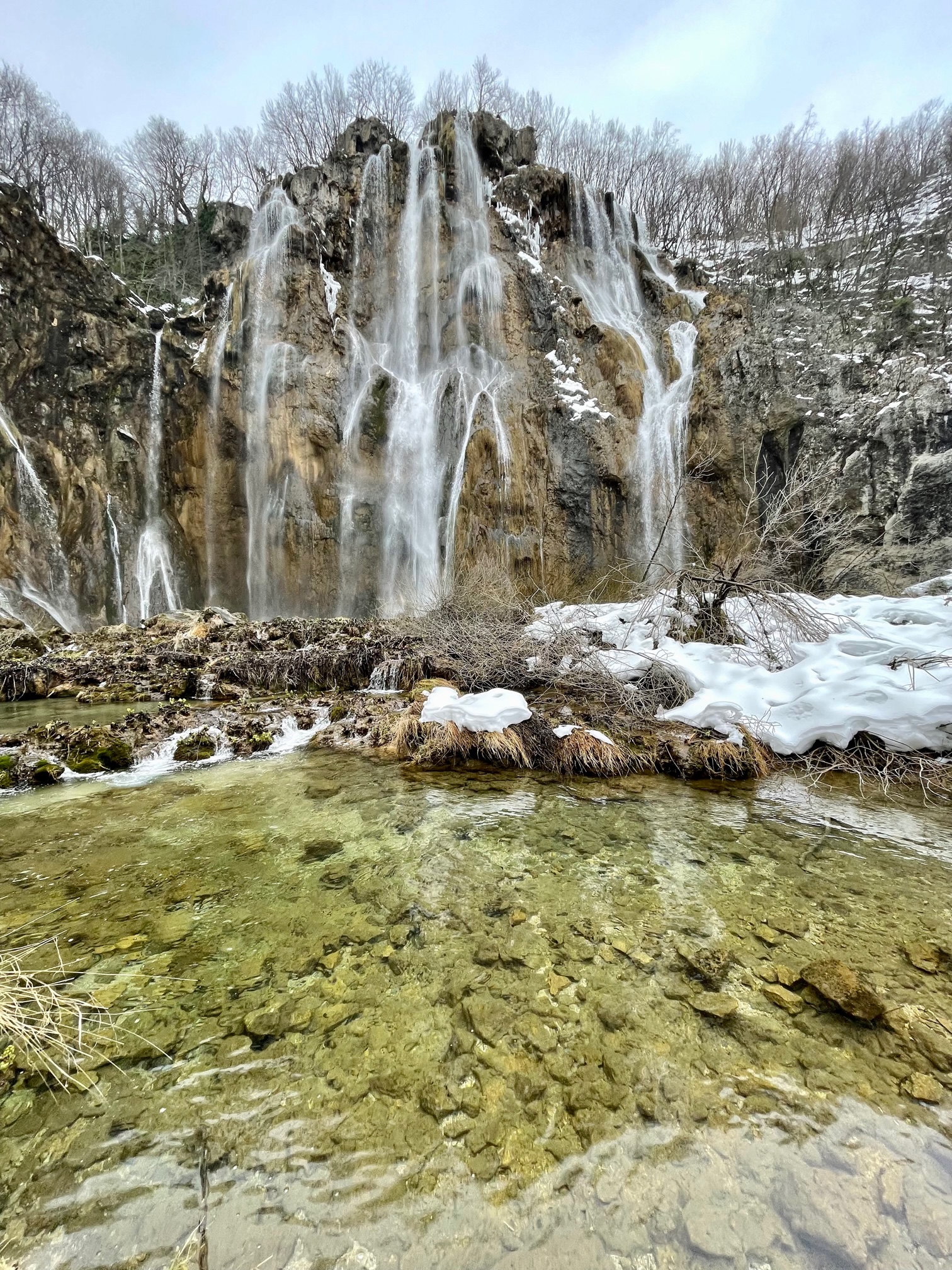
Plitvice Lakes carry a different kind of silence.
Winter, the forest and withdrawal from the rhythm that keeps the body constantly tense.A 7 or 14 day retreat program based on Ayurvedic and Panchakarma principles, for people dealing with stress, early burnout signs, poor sleep, sensitive digestion, fatigue or the feeling that the body no longer recovers on its own.
Fenomen Plitvice · 5–19 February 2027 · 7 days · 4–8 guests
Daily therapies
Individual guidance
Warm meals
Walks through the National Park
Early Bird from €2,290
Explore the Plitvice retreat →The program is not built around a fixed menu of therapies. Each day is adapted to your current state, digestion, sleep, energy and capacity to receive. Panchakarma is the classical Ayurvedic process of gradually preparing the body through oiling, warmth, light food and rest, then supporting the body in letting go of accumulated load from stress, poor digestion and prolonged overload.
7 days is the minimum for a meaningful entry into the process. 14 days allow deeper work, clearer preparation and a more carefully guided recovery. The rhythm is structured, but not rigid. If your body needs more silence, rest or privacy, the day adapts. If you need more conversation, consultation or guidance, that is also available.
The program is for people whose body has long worked under pressure and for whom an ordinary rest no longer brings a sense of real renewal.
Most don’t arrive with a single diagnosis. They come because they haven’t felt well in their body for a long time and don’t know where to start.
This program is for people who are still functioning, but can feel that something is no longer aligned. The mind may still be pushing forward, while the body is asking for quiet, rhythm and support.
The day is calm and structured. There is no overloaded schedule pretending to be recovery. The body needs space, not another list of obligations.
Warm water or tea. Gentle yoga, stretching or pranayama according to the person’s state. A short meditation and a simple breakfast.
Two to three procedures a day, depending on the person’s state and the phase of the program. Abhyanga, Shirodhara, Nasya, Pinda Sveda, Netra Tarpana, Udwartana or Swedana. The schedule is not applied mechanically, but adapted to the body.
Freshly cooked, warm and easily digestible food. Kichari, stews and spices that support digestion. The food is simple, but enough.
Walks, gathering medicinal herbs, reading, rest in your room. The afternoon is deliberately left open.
A light dinner, herbal tea, early sleep. Sleep is part of the process.
Each procedure has its purpose. The combination of therapies depends on the person, their digestion, nervous system, strength and phase of the process.
A warm full-body massage with herbal oils. In the Ayurvedic process it is used to relax the body, support circulation, calm the nervous system and prepare for the deeper phases of the program.
Warm oil flows continuously over the forehead for 40 to 60 minutes. In the Ayurvedic tradition it is used to calm the mind, tension and an overloaded nervous system.
Herbal oil is applied into the nasal passages. In the Ayurvedic tradition Nasya is used for the head, sinuses, neck and senses. It can bring a sense of easier breathing, clarity in the head and relief of accumulated tension.
A small reservoir of paste is formed around the eyes and filled with warm ghee. The procedure lasts about 30 minutes and is traditionally used for tired, dry or overstrained eyes.
Warm herbal poultices are applied to tense areas of the body. The heat and herbs help soften the tissues, reduce stiffness and support circulation.
Usually follows Abhyanga. The heat encourages sweating and supports a gradual sense of lightness in the body. The intensity is always adapted to the person.
A dry massage with herbal powders. Used to stimulate circulation, bring a sense of lightness in the body and refresh the surface tissues.
The deeper phases of the classical Panchakarma cycle within the 14-day program are carried out only when the body is ready and strictly according to individual assessment.
This is not a juice cleanse, fasting retreat or raw food program. Every meal is warm, freshly cooked and easy to digest. Kichari, stews, oat porridge with ginger and cinnamon, herbal teas. The food is simple, but not poor. The goal is to nourish the body without a sense of heaviness.
The goal is not restriction or fasting. The goal is to relieve a digestive system that, for many, has long worked under pressure. When digestion finds a calmer rhythm, the body moves more easily into the process of renewal.
At the end of the program, each person receives individual guidance for food and rhythm after returning home.
7 days is the minimum for a meaningful entry into the process.
Abhyanga, therapies for the nervous system, sleep and digestion. Suitable for a first visit or for people who need a gentler entry into the Ayurvedic process. The focus is on rest, warmth, digestion and calming the body.
A deeper Panchakarma process with a preparation phase, internal oiling and purgation according to individual assessment. For people who are more deeply exhausted or who want more thorough work with the body. A slower rhythm allows a more stable and carefully guided process.
Winter retreat at Plitvice Lakes is the next upcoming program. The current autumn cycle on Rab is already underway, through 4 October 2026.
Exact date not yet confirmed.
Send an inquiry to be notified when the spring date opens.
20.09. – 04.10.2026.
7 or 14 day stays possible.
7 days from €2,590 per person.
14 days available on request.
Exact price depends on room type.
05.02. – 19.02.2027 · 7 days, Fenomen Plitvice.
Early Bird: €2,290 (double) / €2,690 (single) per person.
Regular price: €2,490 (double) / €2,890 (single) per person.
See the Plitvice retreat →
These are common personal experiences guests describe during the program and after returning home. They are not medical promises or guaranteed outcomes.
Plitvice Lakes carry a different kind of silence.
Winter, the forest and withdrawal from the rhythm that keeps the body constantly tense.The sea, forest, silence and distance from everyday rhythm are an important part of the process, just as much as the therapies themselves.
Spring and autumn dates. The sea, Mediterranean air and open space help the body naturally step away from the pressure of daily life. Rab is especially suitable for spring reset and autumn regeneration.
The winter program. Forest, water, snow and silence create space for withdrawal, warmth and renewal. Plitvice is for those who need a real distance from their everyday surroundings and their usual pace.
For individuals, couples or small private groups, Detox Croatia can organise private programs in Samobor, Rab Island, Plitvice Lakes or selected exclusive locations across Croatia. These are created outside the group dates and adapted to your schedule, privacy needs and current state. Write to us and we will find the right format together.
It is not a medical treatment or a substitute for medical care
It is not a juice cleanse, fasting program or raw food retreat
It is not aggressive body cleansing or forced detox
It is not a program where everyone gets the same protocol at the same intensity
This is a space where the body can finally slow down.
7 or 14 day program
Small groups of 4 to 8 guests
Accommodation at the retreat location
Three warm cooked Ayurvedic meals daily, including a light cooked evening meal
Ayurvedic teas throughout the day
Initial Ayurvedic consultation and pulse-based assessment
2 to 4 therapeutic elements per day, adapted to your state
Shirodhara, Abhyanga, Nasya, Netra Tarpana and additional therapies as appropriate
Post-retreat integration call after returning home
Everything essential is included. Your treatments are not chosen from a menu or limited by a package tier. Each day, the program is adjusted to your digestion, energy, sleep, nervous system and overall capacity. We keep one standard of care for every guest, because the body does not recover according to pricing categories.
Is this Panchakarma?
Yes, the program is based on Panchakarma principles, but the intensity and phases are adapted to each person. The weekly program emphasises therapies, food and calming the body. The two-week program can include deeper phases according to individual assessment.
Will I be hungry?
No. The food is warm, simple and there is enough of it. The goal is to relieve digestion, not to starve.
Is the program suitable for burnout and chronic exhaustion?
It can be suitable for people dealing with the effects of long-term stress, insomnia, chronic fatigue, mental fog and digestive issues. Before confirming the program, we always talk to see whether the approach fits your state.
I have health issues. Can I come?
It depends on your state, the medications you take and your body’s current capacity. That is why we talk in advance. For chronic conditions the program can be helpful, but we do not enter the process without an assessment.
What happens after the program?
Each person receives individual guidance for food and rhythm for the first week or two after returning. That period is just as important as the program itself.
The first conversation is not a booking. It is a way to see whether the program is right for your state.
If the body has been giving signs for a while, the first step is not a booking. First we have a short conversation. We look at where you are now, what exhausts you most, and whether this program makes sense for your state.
See if this program fits youor write directly: info@detoxcroatia.com